
Maximize what's possible at your level.
Complete and incomplete SCI rehabilitation, delivered at home. We build strength, mobility, and the practical skills to adapt your environment for the long run.
What is a spinal cord injury?
A spinal cord injury occurs when there is damage to the spinal cord due to trauma, disease, or degeneration. It can lead to a partial or complete loss of function below the level of injury, affecting movement, sensation, and autonomic functions such as breathing, digestion, and circulation.
Where the injury sits on the spine, and whether it's complete or incomplete, shapes what recovery looks like. We build your plan around your specific level and goals.
Levels of spinal cord injury.
The higher the injury on the spine, the more of the body it tends to affect.
Cervical (C1–C8)
Neck and upper body. The most severe level — can cause quadriplegia / tetraplegia and may affect breathing.
Thoracic (T1–T12)
Often results in paraplegia while preserving arm and hand function. Core stability and balance are affected.
Lumbar (L1–L5)
Partial or complete leg paralysis; arms and core are usually spared. May affect bladder, bowel, and sexual function.
Sacral (S1–S5)
The least common level. Affects the hips, legs, and pelvic organs — many people can still walk.
Paraplegia, quadriplegia, complete & incomplete.
Paraplegia affects the lower half of the body, with the arms and hands spared — typically from thoracic, lumbar, or sacral injuries. Quadriplegia (tetraplegia) affects all four limbs and the torso, from cervical injuries, and may require breathing support.
A complete injury means no sensation or movement below the level of injury. An incomplete injury means some function remains, and that remaining function is often where rehabilitation makes the biggest difference.

How exercise & therapy can help.
Rehabilitation focuses on maximizing function, independence, and long-term health below and around the level of injury:
- Strength & mobility in all preserved muscle groups.
- Balance & coordination for safer transfers and movement.
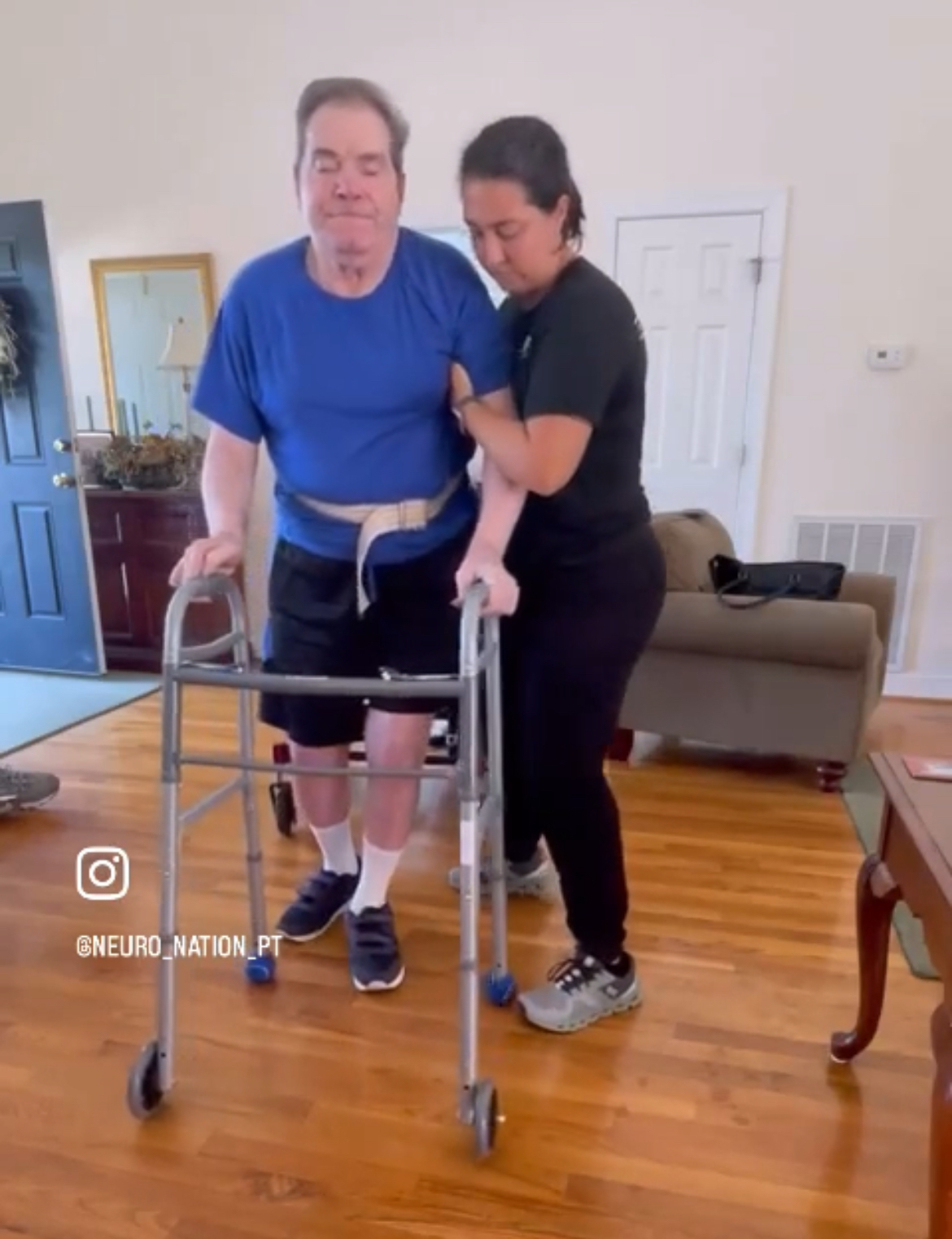
- Wheelchair & gait training for real-world maneuvering.
- Spasticity & pain management.
- Bladder & bowel control strategies.
- Home safety & independence training.
Programs for spinal cord injury.
From self-paced online classes to one-on-one in-home therapy. No contracts, cancel anytime.
Online Exercise Program
- 7-day free trial.
- Personalized schedule with clear instructions, followed in our app.
- Pre-recorded video exercise classes at various levels.
- Focused on walking, cognition, strength, and balance.
- Ask questions to a PT with neurologic expertise.
Recommended for individuals able to stand · cancel anytime.
SCI Recovery Program
Discount for Packages Paid in Full
- What it is. Personalized in-home PT improving walking, mobility, strength, and functional independence.
- Who it's for. Any stage of recovery, for complete and incomplete injuries.
- Includes. Gait retraining, balance recovery, and spasticity management.
May be covered under insurance · cancel anytime.
Let's figure out what's possible. Together.
No referral needed. Fill out our short form and we'll be in touch within one business day.